
Oral Appliances
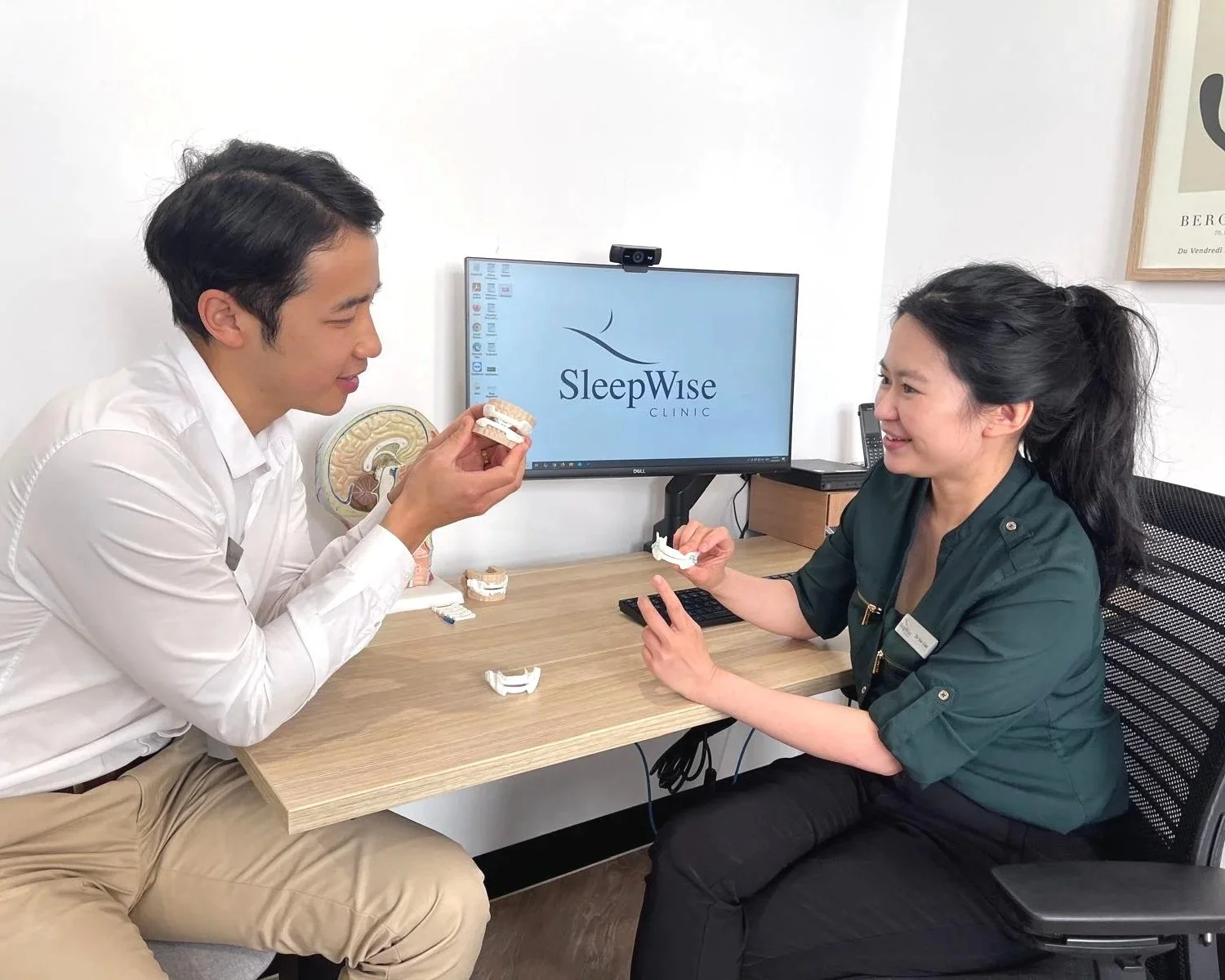
If you have been told you need treatment for snoring or sleep apnoea, you may have come across a device that fits in your mouth while you sleep.
These devices go by many names - mandibular advancement splint, mandibular advancement device, sleep mouthguard, anti-snoring device, dental sleep device or simply an oral appliance - but they all work on the same principle. Whatever you call them, they are changing lives one quiet night at a time.
The science behind oral appliances
When you fall asleep, the muscles throughout your body relax including those in your throat and jaw. For many people, this relaxation allows the soft tissues at the back of the throat and the base of the tongue to collapse inward, partially or fully blocking the airway. The result is snoring, disrupted sleep and, in more serious cases, obstructive sleep apnoea.
An oral appliance works by gently holding the lower jaw in a slightly forward position. This small but precise repositioning opens up the airway at the back of the tongue and palate, creating enough space to allow unobstructed airflow throughout the night. The snoring stops, breathing normalises, and you, and anyone sleeping nearby, finally get the rest you deserve.
The Three Types of Oral Appliances
Not all oral appliances are created equal. Understanding the differences matters.
3D-printed nylon
oral appliances
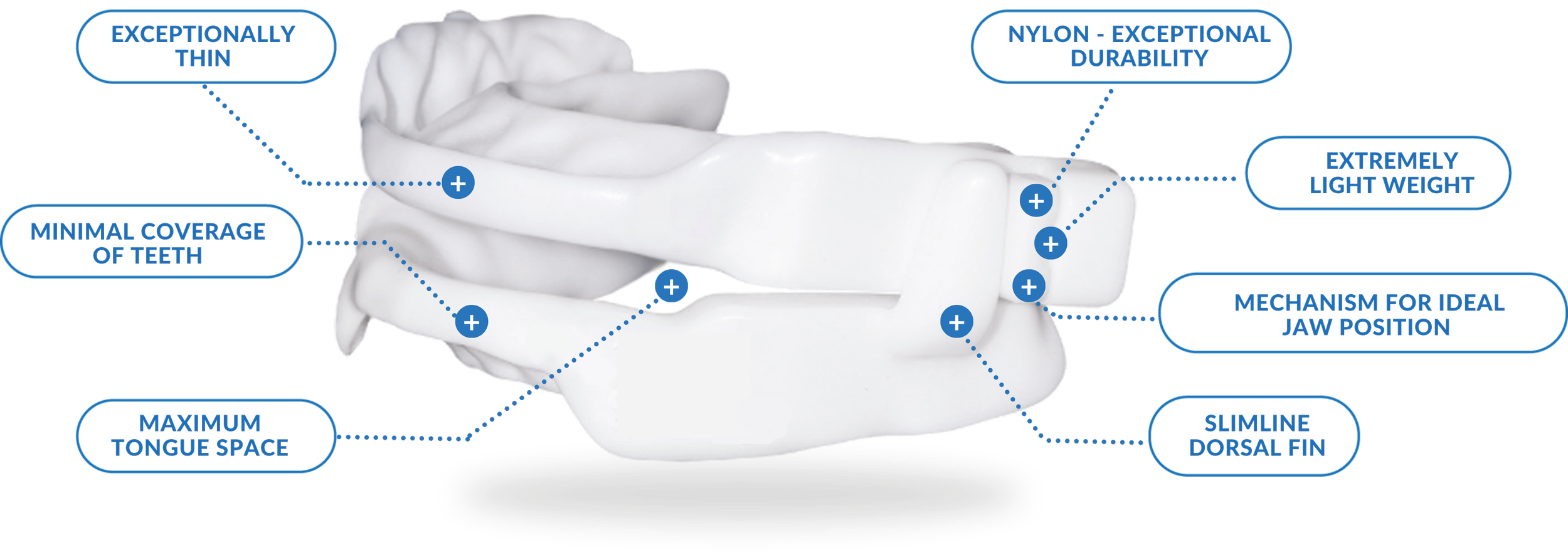
The current standard of care - and the only type used at SleepWise
The latest generation of oral appliances represents a genuine step forward in dental sleep medicine. Using advanced 3D printing technology, medical grade nylon appliances can be manufactured to a thickness of just 0.5mm - resulting in an unprecedented level of comfort, precision and accuracy of fit. Despite being remarkably thin, nylon is virtually unbreakable in the mouth, making these appliances as durable as they are comfortable. 3D-printed nylon is rapidly becoming the new standard of care in oral appliances and is used exclusively at SleepWise Clinic.
Traditional acrylic
oral appliances
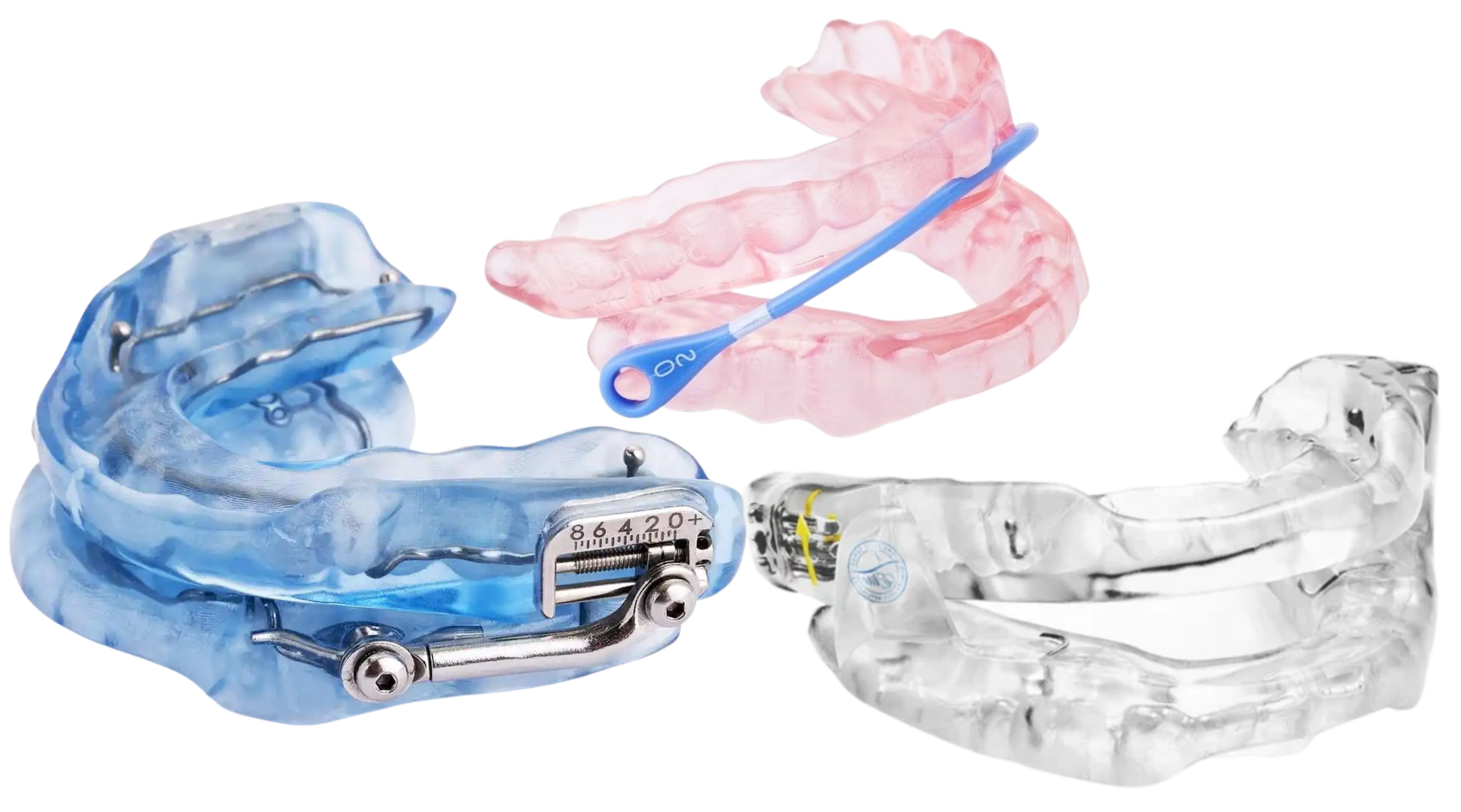
Effective but increasingly obsolete
Acrylic oral appliances have been used effectively for many years and have helped countless patients overcome snoring and sleep apnoea. However, acrylic is a brittle material prone to fracture, which means appliances must be made relatively thick to withstand nightly use, especially for teeth grinders and bruxers - significantly reducing comfort compared to modern alternatives. While some clinics still use traditional acrylic, this material is increasingly being replaced as 3D-printed nylon becomes the standard.
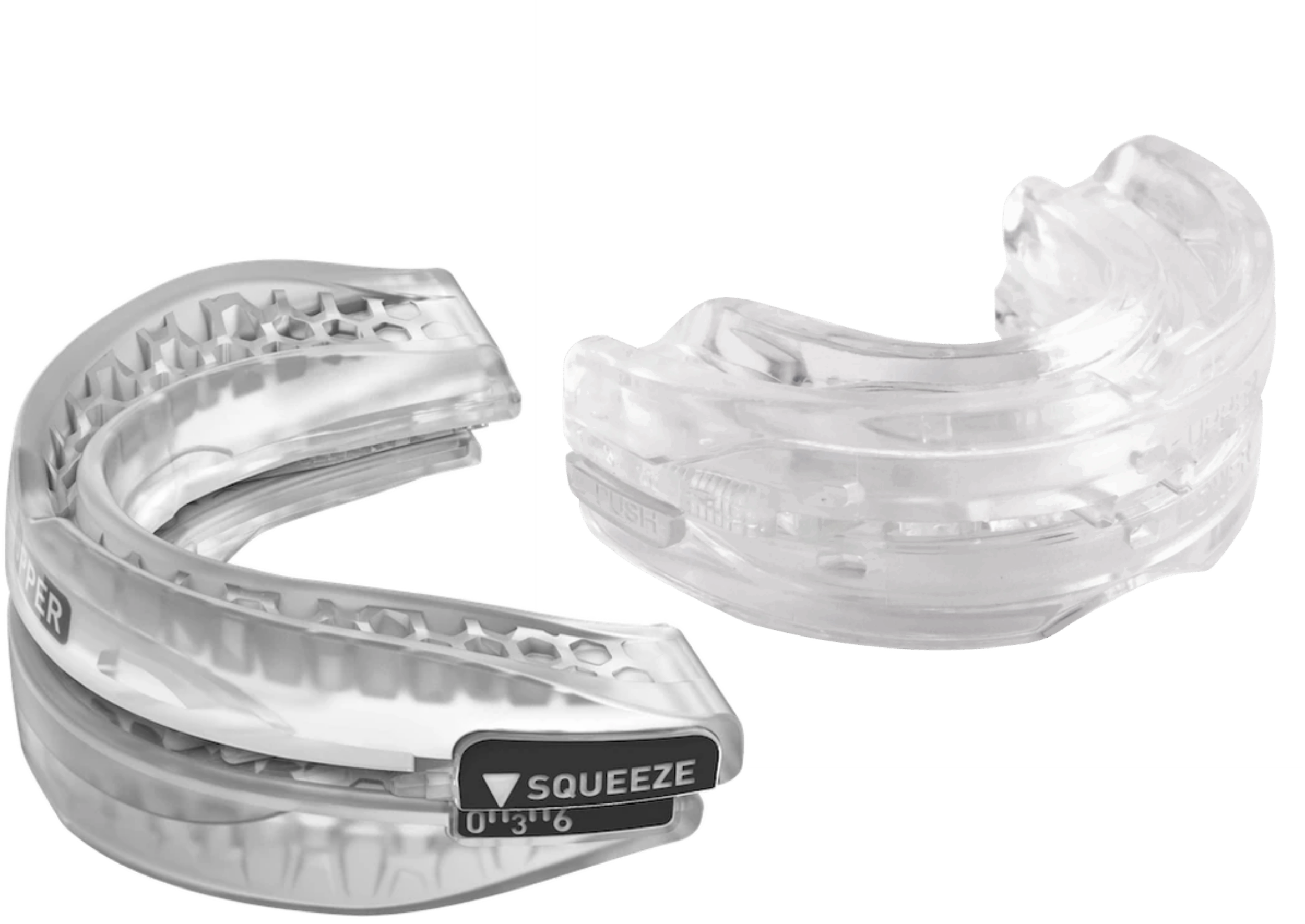
Over-the-counter
boil-and-bite devices
Accessible but limited
Available without a prescription, boil-and-bite devices are the most accessible option, but come with significant limitations. Because they are one-size-fits-all, they must be made large enough to accommodate a wide range of jaw sizes, making them far bulkier than necessary. The polymer material tends to dislodge during sleep and most offer little to no ability to adjust jaw position to find the optimal setting. For the ones that do, adjustment increments are pre-set so you cannot adjust these comfortably if required. For anyone with genuine snoring or sleep apnoea, these devices fall well short of what a custom-made appliance can achieve for you.
The right fit is not a single step - it is a calibrated process.
Small, precise adjustments over time find the exact jaw position that effectively reduces snoring and sleep apnoea while keeping the appliance comfortable to wear every night.
Why custom-made and personalised care makes all the
difference
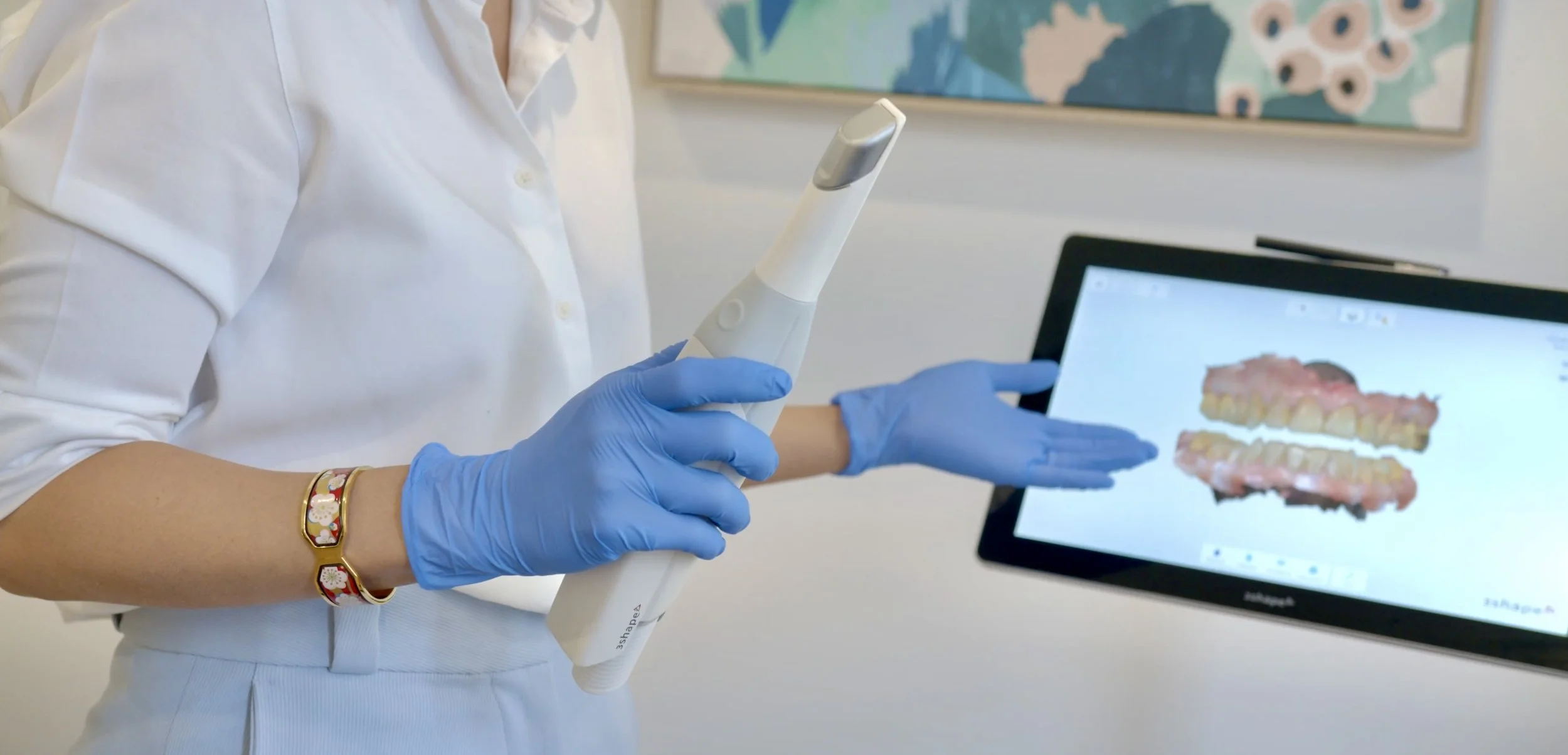
A custom oral appliance is precision-fitted by a SleepWise dentist trained in dental sleep medicine using a detailed 3D intraoral scan of your teeth and jaw. This means that your dental device fits comfortably and securely and importantly, allows your jaw position to be adjusted incrementally over time.
Research consistently shows that there is no single gold standard appliance design. What matters most is patient comfort, appliance adjustability and the management of any minor side effects that may occur while getting used to the oral appliance. These are the factors that drive compliance, and compliance is what delivers results.
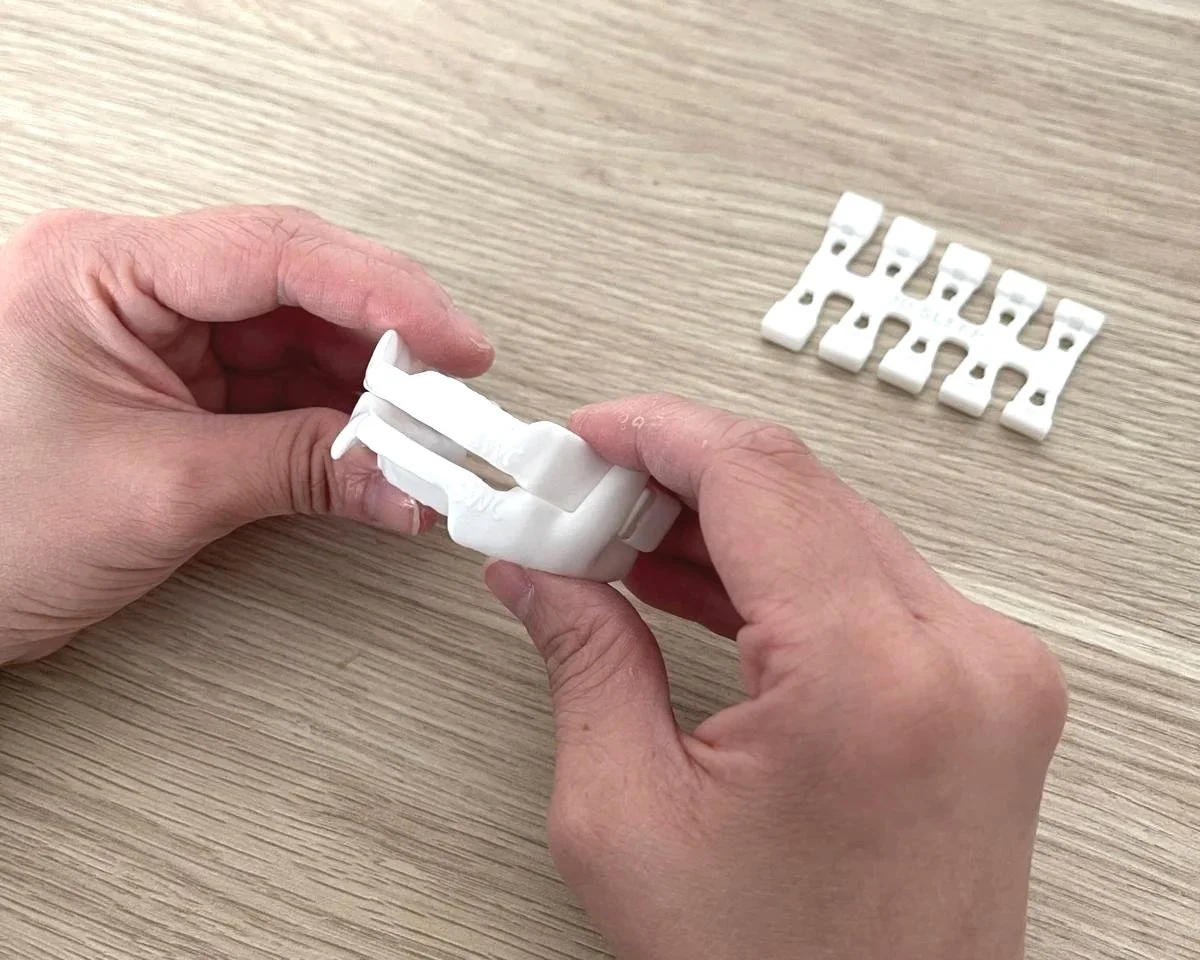
Finding the optimal jaw position is a process known as titration - small, incremental adjustments that allows you and your SleepWise clinician to optimise your lower jaw position that effectively reduces snoring and sleep apnoea, while keeping the appliance comfortable night after night.
The right appliance design for each patient also depends on individual factors - the number and configuration of teeth, the relationship between the upper and lower jaw and individual factors such as the presence of bruxism and jaw joint health. This is why assessment by a trained sleep medicine dentist is so important.
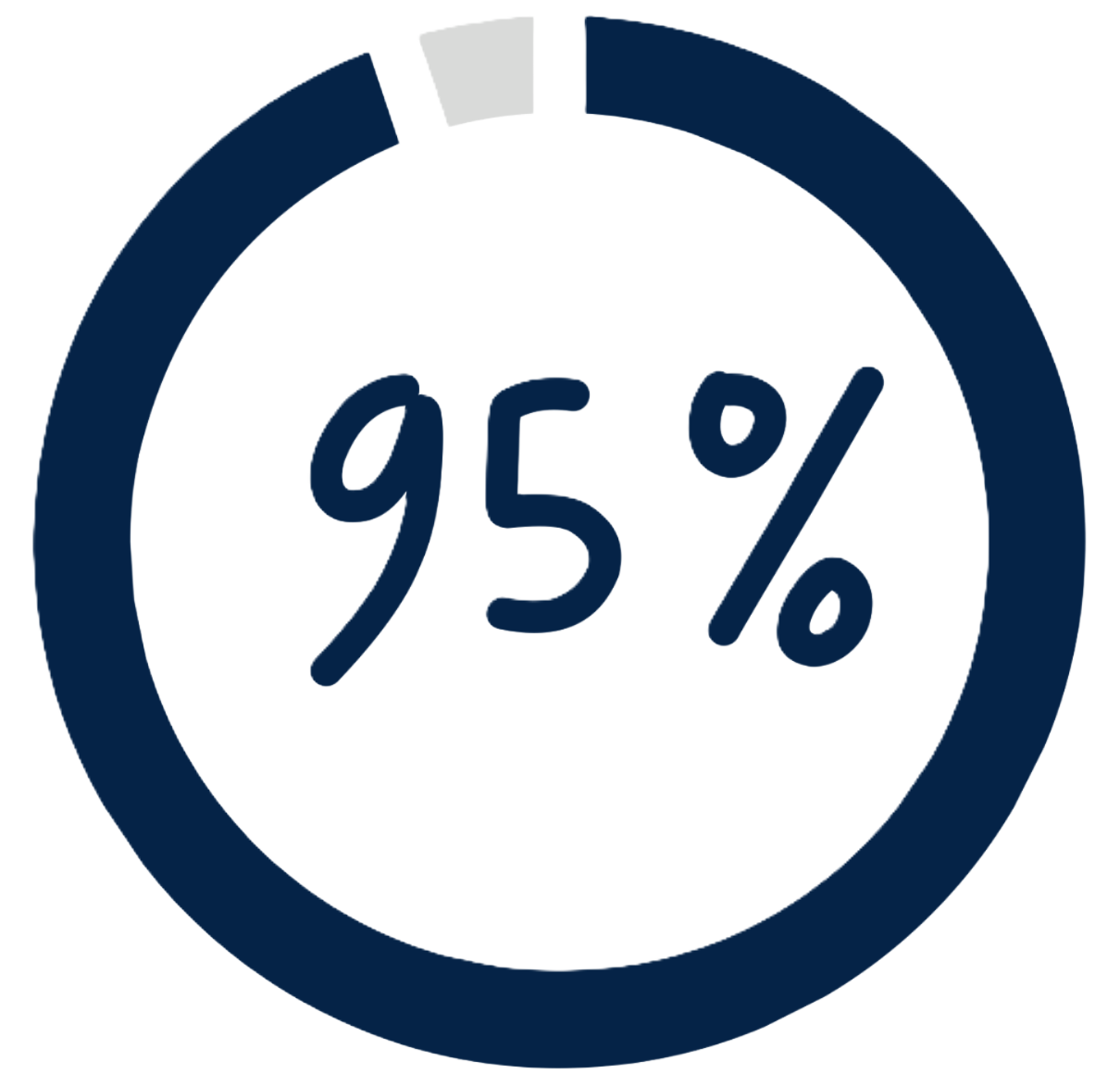
95% of patients experience improvement in snoring with a custom oral appliance
92% effectiveness demonstrated for sleep apnoea in clinical studies
Why compliance matters
Compared to CPAP - the other frontline treatment for sleep apnoea - oral appliances offer a significantly more comfortable and convenient experience. CPAP requires wearing a mask connected to a machine each night, which many patients find difficult to tolerate long-term. Between 30 and 60% of patients prescribed CPAP are unable to use it consistently.
Oral appliances are small, silent and easy to travel with, which translates to far greater compliance and, ultimately, better health outcomes. A treatment that is worn every night works. A treatment that sits on the bedside table does not.
Oral appliance vs CPAP
Is an oral appliance right for me?
-
Oral appliances are the frontline treatment recommended by sleep physicians and ENT surgeons for snoring - and the most comfortable and effective option available. No referral needed to get started.
-
Custom oral appliances are recommended by the Australasian Sleep Association and the American Academy of Sleep Medicine as a frontline treatment for mild to moderate OSA, and as an effective alternative to CPAP for patients who cannot tolerate it.
-
If CPAP is not working for you - for any reason - an oral appliance is a clinically proven alternative. Many of our most satisfied patients came to us after years of struggling with CPAP. The best treatment for you is the one that you are most comfortable with.
-
A history of bruxism or TMJ sensitivity is not a reason to rule out oral appliance therapy. It does require careful assessment and attentive management - both of which are central to how SleepWise sleep medicine dentists work. Read more about how we do this on our Bruxism & TMJ information page.
The SleepWise custom-made oral appliance
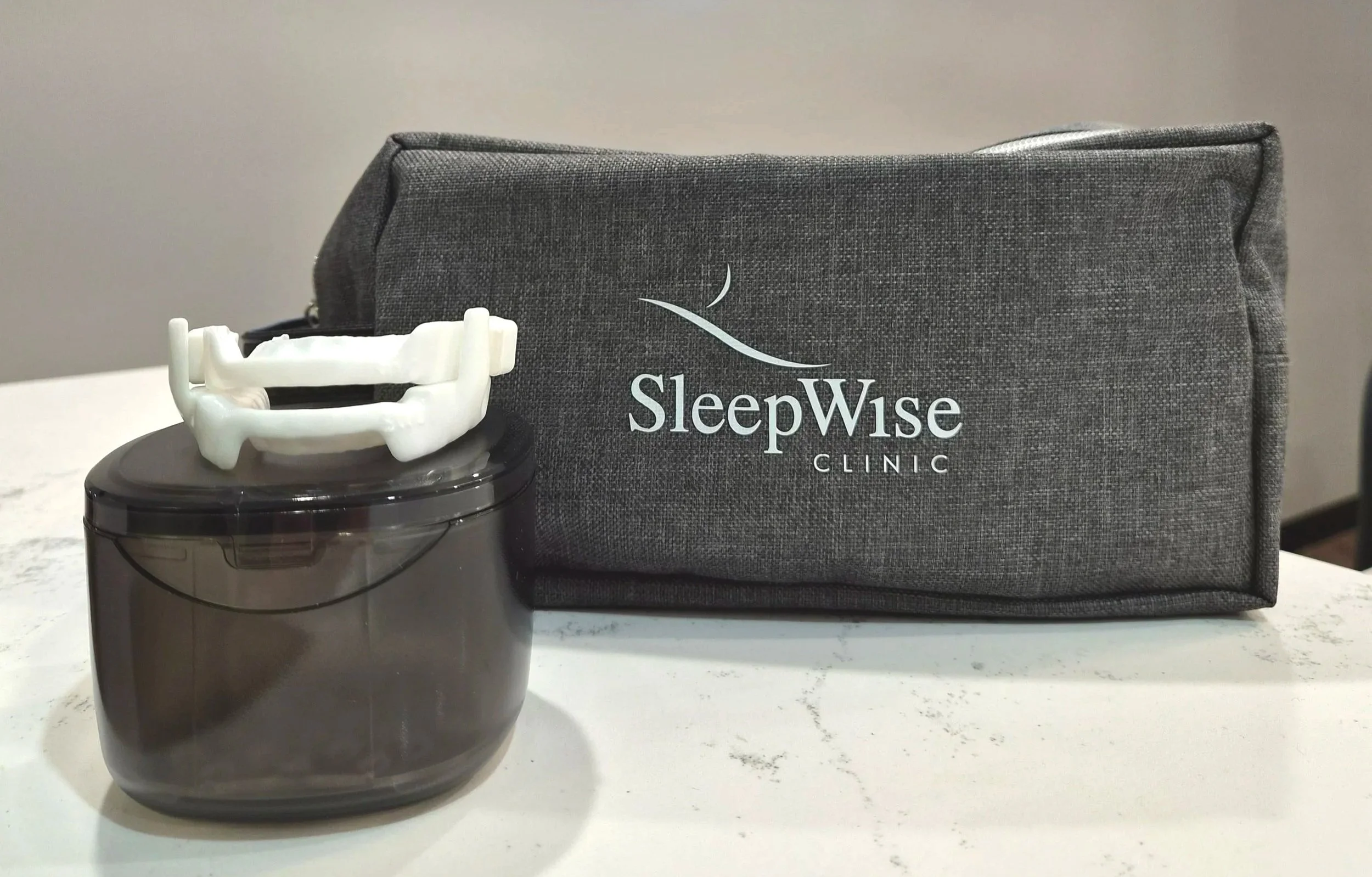
The gap between a custom oral appliance and an off-the-shelf device is bigger than most people realise. Here is what makes the difference at SleepWise.
Precision-fitted using 3D intraoral scanning. Manufactured from 3D-printed nylon - thin, strong and virtually unbreakable. Australian-made by a specialist Melbourne-based dental sleep laboratory. Adjustable to find the optimal jaw position with your comfort at the forefront. Backed by a three-year laboratory warranty. Supported by experienced and committed sleep medicine dentists who truly want to help.
Get started today
Not sure if your snoring needs treatment?
Take our free two-minute online sleep apnoea test and get a clearer picture of your risk.
Ready to do something about it?
Book a consultation or a free call with one of our treatment coordinators - no referral needed, no obligation.