Teeth Grinding, Jaw Pain, and Snoring - Can a MAS Help?
If you've been told you grind your teeth or have been diagnosed with temporomandibular joint dysfunction (TMD), one of the first questions you're likely to ask is whether you can still use a mandibular advancement splint for snoring or sleep apnoea. It's an understandable concern - and one our sleep medicine dentists hear regularly. The reassuring answer, for the vast majority of patients, is yes - with the right device and the right clinical management.
Why the Concern Exists
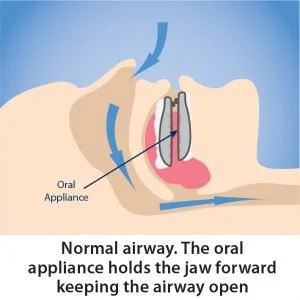
Dental mouthguards for snoring and sleep apnoea - also known as mandibular advancement splints (MAS) or mandibular advancement devices (MAD) - work by gently holding the lower jaw in a slightly forward position during sleep. This repositions the jaw to open the airway at the back of the throat, preventing the soft tissue collapse that causes snoring and obstructive sleep apnoea.
Because oral appliances reposition the jaw while you are wearing the plates, it's natural to wonder whether this places additional stress on the temporomandibular joints and whether that stress might worsen existing TMD symptoms. This is a legitimate clinical consideration, and it's exactly why professional assessment and management matters so much.
What the Research Actually Shows
The clinical evidence on this topic is both reassuring and nuanced. Around one in four patients may experience mild TMD symptoms in the early stages of dental appliance therapy for snoring or sleep apnoea - most commonly jaw soreness or stiffness in the first few weeks. However, research consistently shows that these symptoms typically decrease over time, and that long-term risks remain relatively low when therapy is properly managed.
Meta-analyses confirm that occlusal splints significantly reduce pain and improve jaw function in TMD patients. Clinical evaluations of these 3D-printed snoring mouthguards demonstrate accurate fit and notable symptom relief over a three-month period. And narrative reviews suggest that well-designed, adjustable snoring mouthguards like the SleepWise nylon mandibular advancement splints actually help minimise TMD signs when used appropriately.
Importantly, some patients with existing TMD find that gentle jaw advancement reduces tension and improves joint stability, particularly when the appliance is well-fitted and worn consistently. The critical variable is not whether a patient has TMD, but whether their snoring mouthguard or sleep apnoea mouthguard is custom-made, properly fitted, and carefully monitored over time.
A widely held misconception?
There is a widely held misconception that wearing a snoring mouthguard appliance at night might worsen teeth grinding or place additional strain on the jaw - when in fact, the opposite is often true.
A well-fitted mandibular advancement splint (MAS) acts as a protective barrier between the upper and lower teeth, preventing the direct tooth-on-tooth contact that causes the wear, chipping, and enamel loss associated with bruxism. Beyond protecting the teeth themselves, the precise jaw positioning achieved by a custom oral appliance helps to decompress and unload the temporomandibular joints - allowing the muscles and joints that work hard all day to genuinely rest during the night, rather than remaining under the sustained tension that grinding and clenching create.
For many patients, this combination of tooth protection and joint offloading means they wake up with noticeably less jaw soreness, reduced facial tension, and fewer of the morning headaches that so often accompany untreated bruxism. In this sense, a snoring dental appliance or a sleep apnoea dental mouthguard isn't simply a snoring or sleep apnoea treatment - it's also a layer of overnight protection for your teeth and jaw that pays dividends well beyond the airway.
Why Custom-Made Is Non-Negotiable for TMD Patients
For patients with TMD or bruxism, the quality and fit of the dental mouthguard is everything. Over-the-counter boil and bite devices for snoring and sleep apnoea are poorly suited to this patient group. Further, they offer little to no adjustability, tend to dislodge during sleep, and apply uneven pressure to the jaw that can worsen TMD symptoms.
A custom-made dental mandibular advancement splint, fitted by a dentist trained in dental sleep medicine, is an entirely different proposition. Precision-fitted to your individual jaw anatomy using detailed digital impressions and 3D scanning technology, a custom appliance distributes pressure evenly, minimises joint strain, and can be incrementally adjusted to find the optimal position that treats snoring and sleep apnoea without aggravating the jaw.
The thin-profile 3D printed nylon appliances used at SleepWise Clinic are particularly well-suited to TMD patients with their precision fit, minimal bulk, and unbreakable construction mean maximum comfort with minimum strain on the jaw joints.
The Bigger Picture
It's also worth understanding that leaving snoring and sleep apnoea untreated can actually make TMD and bruxism worse over time. The micro-arousals caused by airway obstruction trigger the very jaw muscle activity that contributes to grinding and joint strain. Treating the airway problem is, in many cases, an important part of resolving the jaw problem.
At SleepWise Clinic, every patient with TMD or bruxism receives a jaw assessment as part of their initial consultation before oral appliance therapy begins. We use a conservative bite registration approach, custom-fit each appliance to the individual patient, provide self-care guidance including stress reduction and jaw exercise techniques, and conduct ongoing reviews to monitor jaw adaptation and bite stability throughout treatment.
You don't have to choose between protecting your airway and protecting your jaw. With the right team, you can do both.
Call SleepWise Clinic on 1300 101 505 to find out how we can help you manage TMD and sleep apnoea together.