How to Stop Snoring. Effective Snoring Solutions and Treatment Options
If you're searching for ways to stop snoring, you're far from alone. Snoring affects millions of Australians and is one of the most common reasons people seek help from sleep medicine clinicians. The encouraging news is that there are highly effective solutions — from straightforward lifestyle changes through to clinically proven medical treatments. Here's a comprehensive guide to the snoring solutions that actually work.
Start With a Sleep Study
Before exploring treatment options, it's worth understanding one critical point: effective snoring treatment begins with knowing whether obstructive sleep apnoea is present. Over 70% of regular snorers have some degree of sleep apnoea, and the severity of that condition determines which treatment will deliver the best outcome. A sleep study is the only definitive way to get this information, and for most patients, it can be done in the comfort of your own home.
Lifestyle Changes That Can Reduce Snoring
For some people, targeted lifestyle changes can make a meaningful difference to snoring, particularly when the snoring is mild and not associated with significant sleep apnoea.
Sleep position is one of the simplest adjustments to make. Sleeping on your back allows the tongue and soft tissues to fall toward the back of the throat, partially blocking airflow. Switching to a side-sleeping position can meaningfully reduce snoring in positionally dependent cases.
Alcohol and sedatives are well-documented snoring aggravators. Alcohol relaxes the throat muscles, worsening airway collapse during sleep. Research confirms that consuming alcohol within three hours of bedtime significantly increases snoring.¹ Reducing or eliminating alcohol before bed is a practical first step.
Weight management plays an important role for many snorers. Excess tissue around the throat narrows the airway, increasing the likelihood of obstruction during sleep. Even modest weight loss can reduce snoring severity in overweight individuals.
Smoking cessation is another evidence-based strategy. Research published in the journal Chest confirms that smoking significantly increases the risk of obstructive sleep apnoea through airway inflammation and increased upper airway resistance, and quitting reduces this risk over time.²
Sleep duration also matters more than most people appreciate. Sleep deprivation causes the throat muscles to relax more deeply during sleep, increasing the risk of airway obstruction. Aiming for the recommended seven to nine hours per night³ supports better muscle tone and reduces snoring susceptibility.
Medical Treatment Options for Snoring and Sleep Apnoea
While lifestyle changes can help, they are rarely sufficient on their own for people with moderate to severe snoring or underlying sleep apnoea. Medical treatment options are more reliably effective and more comfortable than many patients expect.
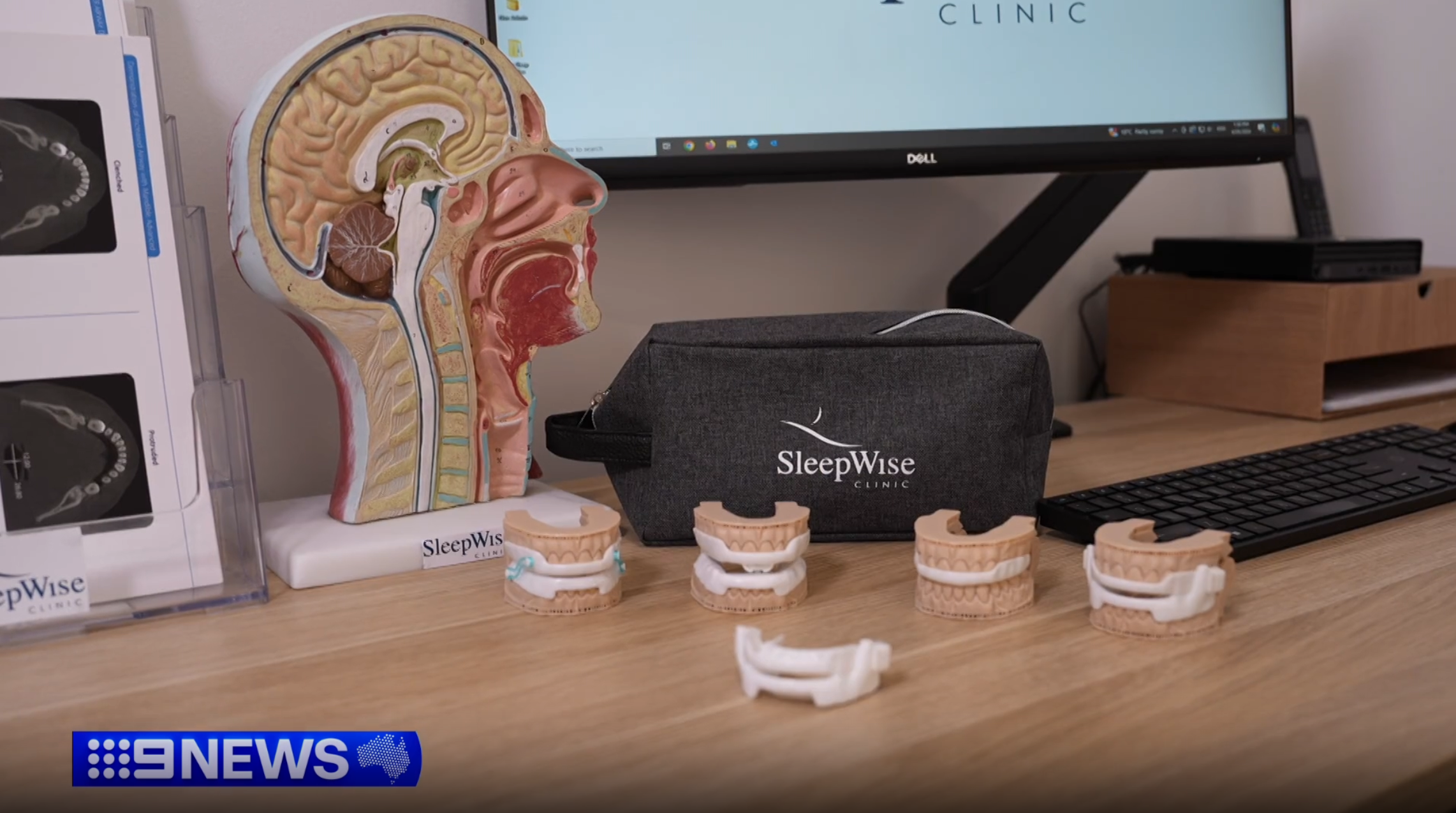
Custom oral appliances are the treatment of choice for snoring and mild to moderate obstructive sleep apnoea, and are recommended by both the Australian Dental Association and the Australasian Sleep Association. Also known as mandibular advancement splints or anti-snoring mouthguards, these custom-fitted devices work by gently repositioning the lower jaw forward during sleep, opening the airway and preventing the tissue vibration that causes snoring. Clinical studies have demonstrated long-term benefits in adult snoring, with research confirming their effectiveness in reducing snoring frequency and intensity over time.⁴ Custom oral appliances are small, silent, travel-friendly, and require no mask or machine, making them significantly easier to tolerate than CPAP for many patients.
CPAP therapy - Continuous Positive Airway Pressure - is the most widely prescribed treatment for severe obstructive sleep apnoea. A CPAP machine delivers pressurised air through a mask worn during sleep, keeping the airway open throughout the night. When used consistently, it is highly effective. However, CPAP compliance is a well-documented challenge with studies suggest that between 30% and 60% of patients struggle to adhere to CPAP therapy long-term⁵, which is why many patients seek a CPAP alternative such as a custom oral appliance.
Why SleepWise Clinic?
At SleepWise Clinic, we have helped more than 20,000 patients across Victoria find lasting relief from snoring and sleep apnoea since 2001. Our sleep medicine dentists provide custom-made 3D printed oral appliances, precision-fitted using the latest intraoral scanning technology for an unprecedented level of comfort and accuracy.
We accept patients with and without referrals, offer a free online sleep apnoea test, support each patient in their journey to quieter nights and more restful sleeps.
Call SleepWise Clinic on 1300 101 505 or take the free online sleep apnoea test today and take the first step toward quiet, restorative sleep.
Request for references: 1. Stein & Friedmann (2005); 2. Krishnan et al. (2014); 3. Watson et al. (2015); 4. Chiang et al. (2022); 5. Singhal et al. (2016)