
Mandibular Advancement Splint: How It Works and Who It May Suit
Could a small change in jaw position help address disrupted breathing during sleep? A mandibular advancement splint may be an option for some people with obstructive sleep apnoea or snoring, but suitability depends on more than the symptoms you notice at night. You may also be wondering whether a device could help your breathing, feel comfortable to wear or affect your jaw and bite.
The best starting point is an accurate diagnosis and individual assessment, rather than choosing a mouthguard off the shelf. A sleep medicine dentist can review your sleep study results, oral health and jaw, then explain whether a custom-fitted splint may suit you and what fitting, adjustments and follow-up appointments could involve.
This article explains how a mandibular advancement splint works, who may be considered for one, and what to expect during assessment, fitting and ongoing reviews. You’ll also learn how custom appliances differ from over-the-counter boil-and-bite devices, any potential side effects, and what questions to ask at a dental sleep consultation in Melbourne CBD, Hawthorn East or Geelong.
Key Takeaways
A mandibular advancement splint holds the lower jaw slightly forward during sleep, which may help keep the airway behind the tongue more open.
Whether a custom splint may suit you depends on your diagnosis, symptoms, oral health and individual clinical assessment.
When comparing a splint with CPAP, consider how each treatment is used and discuss suitable options with your treating clinicians.
Assessment and follow-up matter. Ask what diagnostic information and oral checks are needed, how a custom appliance is fitted, and what to do if comfort or your bite changes.
A dental sleep consultation can help clarify whether a custom oral appliance is a suitable option for you and what questions to ask before proceeding.
Table of Contents
What is a mandibular advancement splint, and what does it do?
Mandibular advancement splint benefits, limits, and alternatives
Explore custom mandibular advancement splint care with SleepWise Clinic
What is a mandibular advancement splint, and what does it do?
A mandibular advancement splint is a custom oral appliance that holds the lower jaw slightly forward during sleep. This position may help keep space open behind the tongue and support airflow. It is a treatment option to consider, not a guaranteed cure or a suitable solution for everyone.
The device differs from a sports mouthguard, which protects teeth from impact, and from store-bought products intended to reduce snoring. For a general overview of the appliance and its uses, see this reference on mandibular advancement splints. Whether an oral appliance is appropriate depends on the person’s breathing problem, oral health and clinical assessment.
How does a mandibular advancement splint work during sleep?
During sleep, the muscles in the upper airway relax. With obstructive sleep apnoea (OSA), the airway repeatedly narrows or becomes blocked, disrupting normal breathing. A clinician-planned forward jaw position can also move the tongue and nearby soft tissues forward, potentially creating more room behind the tongue. The aim is to support airflow, but the effect varies between people and needs appropriate clinical assessment.
How is a custom splint different from an off-the-shelf mouthguard?
A custom appliance is made to fit an individual’s teeth and oral anatomy. A sleep medicine dentist can assess whether the teeth and jaw are suitable, scan your teeth so a 3D custom fitted device can be fabricated for you, and review its comfort and use. An off-the-shelf mouthguard is bought without an individual fitting and may not hold the jaw in the intended position. Some retail devices may reduce snoring for some users, but they are not a substitute for diagnosis or personalised advice about OSA.
This distinction matters if you wake unrefreshed, have been told you snore or are concerned about pauses in breathing. Snoring alone does not confirm OSA, and a mouthguard’s fit does not establish whether it is addressing a breathing disorder. A dental sleep assessment can help clarify what is happening and whether a custom oral appliance is a good option for you to manage your snoring or sleep apnoea.
Who may be suited to a mandibular advancement splint?
A splint may be considered for some people with snoring or obstructive sleep apnoea (OSA), but symptoms alone cannot determine whether it is suitable. The decision depends on an accurate diagnosis, your symptom history, sleep-study information and an assessment of your teeth, gums and jaw. A clinician can weigh these factors and discuss which treatment options may fit your needs.
If you are looking for an alternative to CPAP because a mask feels uncomfortable or it is difficult to use consistently, raise that with your treating doctor or sleep clinician. An oral appliance may be considered after individual review, especially if you have mild or moderate sleep apnoea. For patients with severe sleep apnoea, do not stop or change prescribed treatment without discussing it with your care team.
What does a sleep medicine dentist consider before recommending a splint?
Your clinician may review sleep-study findings alongside symptoms such as snoring, disrupted sleep or daytime tiredness. They will also assess whether your teeth and gums can support an appliance, check jaw comfort and oral anatomy, and consider whether a device is likely to stay securely in place. These details help guide the discussion, but they do not guarantee a particular treatment outcome.
A screening questionnaire can help identify whether further assessment may be useful, but it cannot diagnose sleep apnoea. Diagnosis requires appropriate clinical assessment and a sleep study.
Can a splint be considered if CPAP is difficult to tolerate?
It may be worth discussing. Tell your treating doctor or sleep physician what makes CPAP difficult, and ask whether a custom oral appliance could be appropriate in your circumstances. Your existing care plan and diagnosis matter, so coordinate any treatment discussion with your care team rather than making changes on your own.
Use these as discussion points, not a self-diagnosis checklist:
Do I have sleep-study results or a confirmed diagnosis to review?
Are my teeth, gums and jaw suitable for an appliance?
Could the device be retained comfortably while I sleep?
How would this option fit with my current treatment plan?
SleepWise Clinic assesses sleep-study information and oral health suitability when discussing custom oral appliance therapy. If you are in Melbourne or Geelong, a sleep apnoea and snoring dental consultation can help clarify what questions to take to your treating clinician.
Mandibular advancement splint benefits, limits, and alternatives
A custom mandibular advancement splint is compact, non-invasive and worn in the mouth, so it does not require a mask or bedside machine. That format may suit some people, but convenience alone does not show whether it will adequately treat their sleep-related breathing problem. A sleep medicine dentist is trained to review fit, comfort, retention of the appliance and clinical effectiveness as these factors all need individual consideration.
There can be an adjustment period - usually a period of 1 to 2 weeks. Jaw discomfort, excess saliva or changes in how your bite feels in the morning when you remove your splint are possible concerns to raise with the clinician managing your appliance and oral appliance treatment. Follow-up lets your clinician review comfort and discuss whether the treatment is working as intended.
How does a splint compare with CPAP?
The treatments work differently. A splint positions the lower jaw forward during sleep, while CPAP uses pressurised air delivered through a mask to help keep the airway open. The Australian Dental Association and Australasian Sleep Association clinical practice guideline recommends considering oral appliances for adults with obstructive sleep apnoea who are intolerant of CPAP or prefer an alternative. It also notes that CPAP is more effective for improving key sleep-study measures. The right option depends on diagnosis and clinical advice, not a universal ranking. Read the ADA policy statement on oral appliances guidelines.
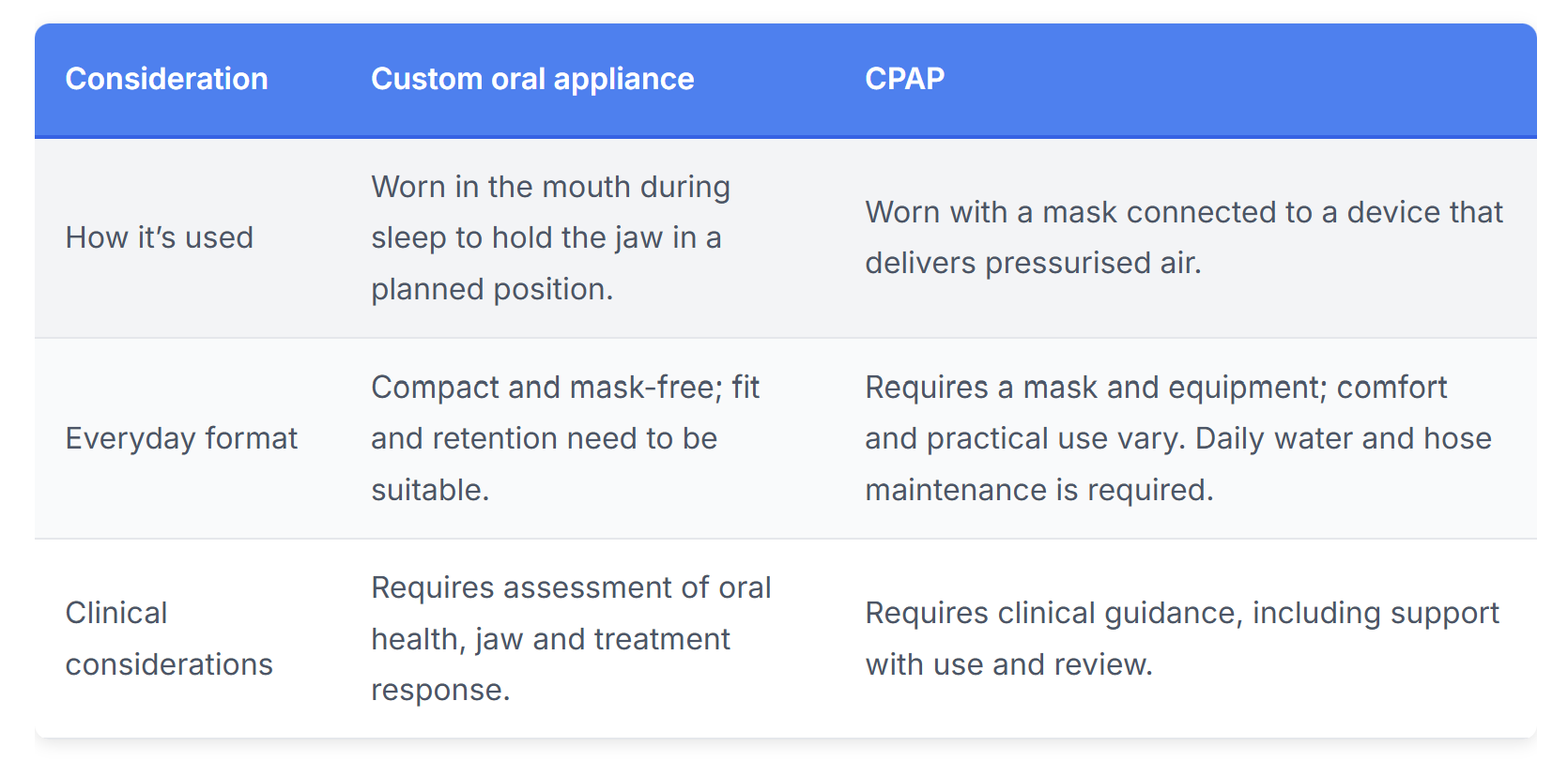
Neither option should be started, stopped or changed without advice from your treating clinician. Depending on the diagnosis and personal circumstances, they may discuss other treatment pathways too. If CPAP is difficult to tolerate, explain what is challenging, such as mask comfort or maintaining use, and ask whether an oral appliance could be considered alongside your existing care plan.
A splint-versus-CPAP comparison can help you explore the differences in more detail. Bring your questions and sleep-study information to a discussion with your treating doctor or sleep physician.
What to expect from assessment, fitting, and follow-up
Assessment for a mandibular advancement splint is a step-by-step process, not simply a matter of ordering a device. A sleep medicine dentist reviews your sleep-related concerns and available diagnostic information, checks whether your mouth and jaw are suitable, and discusses what fitting and ongoing review may involve. The assessment helps determine whether this treatment is appropriate for you, but it does not guarantee a particular recommendation or result.
What happens during a dental sleep consultation?
Your clinician may ask about symptoms, relevant medical history, current treatment and what you hope to address. They can review available sleep-study information and assess your teeth, gums, jaw and relevant oral or airway factors. Bring your sleep-study report if you have one, details of treatments you currently use, and any questions or concerns. You can also ask who will interpret your sleep-study findings and coordinate medical review.
Why do fitting, adjustment, and monitoring matter?
If an appliance is considered suitable, 3D digital scans are used to make one shaped to your teeth and oral anatomy. At fitting, the clinician can check how securely and comfortably it sits and explain its use and care. Any adjustments should be guided by the treating clinician.
Follow-up gives you and your clinician a chance to discuss comfort, fit and treatment response. Contact the team if you notice jaw soreness, tooth discomfort or a change in your bite. Ask what the review plan involves, how to raise concerns, and whether further assessment of treatment response is recommended. Ongoing care is part of making an informed treatment decision, not an optional extra.
In brief, the pathway may include:
1. Consultation: Discuss symptoms, health history and treatment goals.
2. Diagnostic review: Consider available sleep-study information and clarify who coordinates medical interpretation.
3. Oral assessment: Check teeth, gums, jaw and other relevant factors.
**4. 3D dental scan: **Scanning your teeth takes minutes and produces a highly accurate digital model of your teeth that your splint will be based on.
Custom fitting: Your new mandibular advancement splint will be fitted for you and any adjustments will also be made so you will be comfortable during your adaptation of the splint
5. Review: Discuss comfort, fit and treatment response, and raise any changes or concerns.
To discuss assessment for custom oral appliance therapy, you can book a sleep apnoea and snoring dental consultation with SleepWise Clinic.
Explore custom mandibular advancement splint care with SleepWise Clinic
Considering an oral appliance can raise practical questions: could it suit your teeth and jaw, how might it feel to sleep with, and who will review your progress? SleepWise Clinic is a dedicated dental sleep medicine practice serving Melbourne and Geelong. Its consultations assess whether custom oral appliance therapy may be appropriate for snoring or obstructive sleep apnoea, using sleep-study information and an oral health assessment. Check the clinic’s website for consultation locations and availability .
What can SleepWise Clinic help assess?
A consultation can help clarify whether a custom mandibular advancement splint is a reasonable option to explore. Our sleep medicine dentists consider your diagnostic information, symptoms and oral health suitability, including relevant teeth, gum and jaw factors. Any recommendation depends on your individual assessment. A consultation is an opportunity to discuss options, not a commitment to proceed with a particular treatment.
SleepWise Clinic specialises in dental sleep medicine and custom oral appliances, and has been established in Victoria since 2001. Its online snoring and sleep apnoea screening test can be a useful starting point if you are unsure whether to seek further advice. It is a screening tool only, not a diagnosis, and cannot replace appropriate clinical assessment or a sleep study.
What is a useful next step if you are considering a splint?
If you already have sleep-study results, gather them before a consultation. It may also help to note what you have noticed during sleep, any current treatment, and questions about comfort, adjustment and follow-up. You could ask who will review your diagnostic information, what the oral health assessment involves, and how treatment response would be monitored.
You do not need to have chosen a treatment before asking questions. The aim is to understand your circumstances and discuss suitable options with a clinician. For Melbourne and Geelong readers, SleepWise Clinic’s screening and consultation pathways offer a starting point for that conversation. You can explore SleepWise Clinic's care options or book a call with our treatment coordinator here.
Take the next step towards clearer answers
A mandibular advancement splint may help some people with snoring or obstructive sleep apnoea, but it is not right for everyone. Diagnosis, oral health and a well-fitted appliance all matter, as do follow-up and discussion with your treating dentist. A consultation can help you understand whether this option is worth exploring without committing you to a particular treatment.
SleepWise Clinic is a dedicated dental sleep medicine practice established in Victoria in 2001. Its custom oral appliance consultations consider sleep-study information and oral health suitability, helping make the discussion specific to your circumstances. Bring questions about comfort, jaw effects and ongoing review, and ask how an appliance might fit with your current care.
If you are ready to explore what may suit you, explore your options with SleepWise Clinic. A conversation with a sleep medicine dentist is a practical first step towards an informed decision about your sleep care.
Frequently Asked Questions
What is a mandibular advancement splint?
A mandibular advancement splint is a custom oral appliance worn during sleep that holds the lower jaw slightly forward. This position may help maintain space behind the tongue and support airflow. It differs from a sports mouthguard or a generic snoring device because it is made to fit your mouth and considered as part of a clinical treatment plan. Whether it may suit you depends on your diagnosis and oral health.
Can a mandibular advancement splint replace CPAP?
Not for everyone. A custom oral appliance may be use by people who have primary snoring, mild or moderate sleep apnoea and even considered for some people with severe obstructive sleep apnoea, including those who find CPAP difficult to tolerate. CPAP therapy does work a little differently and your diagnosis, sleep-study findings and personal circumstances help guide the discussion. If you use CPAP, do not stop or change your treatment on your own. Speak with your treating doctor or sleep clinician about options and ongoing care.
How does a mandibular advancement splint help with sleep apnoea?
A mandibular advancement splint holds the lower jaw in a planned forward position during sleep. This can also bring the tongue and nearby soft tissues forward, potentially creating more space behind the tongue for airflow. Obstructive sleep apnoea occurs when the upper airway repeatedly narrows or becomes blocked during sleep. The appliance may help some people, but its effect varies and should be assessed and monitored by experienced clinicians like the sleep medicine dentists at SleepWise Clinic.
Is a mandibular advancement splint uncomfortable to wear?
Comfort varies but the splint is generally relatively easy to adapt to, though it may take up to a fortnight. A custom-fitted appliance may take time to get used to, and your sleep medicine dentist can check its fit and discuss adjustments if anything feels uncomfortable for you. Some people notice minor jaw or teeth discomfort or extra saliva when starting to wear an oral appliance.
Can a mandibular advancement splint cause jaw or tooth problems?
Jaw soreness and tooth discomfort can occur with oral appliance use. Your oral health and jaw are assessed before treatment, and follow-up provides an opportunity to discuss changes and review fit. Contact your treating clinician if discomfort persists or your bite takes longer than 30 minutes to resettle in the morning. SleepWise can advise whether the appliance needs attention. The first 12 months of appointments are included in your SleepWise treatment fee as regular reviews are important, so ask what monitoring is appropriate for you.
Do I need a sleep study before getting a mandibular advancement splint?
A sleep study is important for diagnosing obstructive sleep apnoea and understanding the breathing problem being considered for treatment. A screening questionnaire or online screening test can help guide next steps, but it cannot diagnose sleep apnoea. If you have sleep-study results, bring them to your consultation. A clinician can review the available diagnostic information alongside your symptoms and oral health before discussing whether an appliance may be suitable.
How can I get assessed for a mandibular advancement splint in Melbourne or Geelong?
SleepWise Clinic is a dedicated dental sleep medicine practice serving Melbourne and Geelong. Its consultations consider sleep-study information, symptoms and oral health suitability when assessing whether custom oral appliance therapy may be an option. You can use its online snoring and sleep apnoea screening test as an initial information tool, not a diagnosis. Check the clinic’s website for current consultation locations and availability, and bring any sleep-study results and questions you have.
Article by
Dr Krystel Skilton
Dr Skilton graduated with Honours from the University of Western Australia and has built her career across public and private dental practice, with a special interest in sleep-disordered breathing, pain management, orthodontics and geriatric dentistry. She's a regular at conferences - always looking for what's new and what works better - and brings a logical, empathetic approach to every consultation. Her patients leave feeling informed and in control, which is exactly how she thinks it should be. Away from the clinic, she's happiest with her family, or with a cup of tea and a good book.
