Sleep Apnoea in Older Australians: The Most Underdiagnosed Condition Affecting Quality of Life
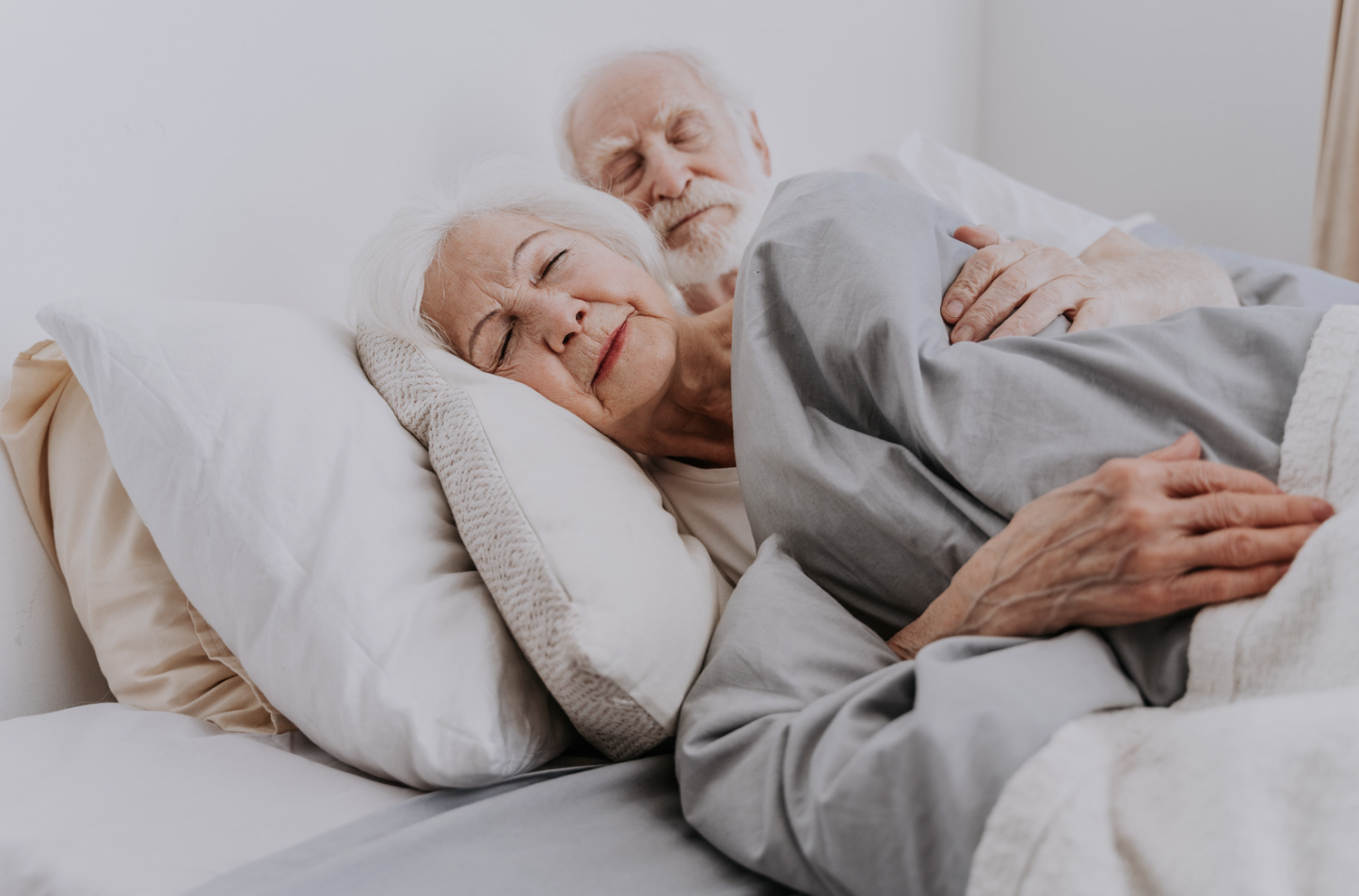
Sleep Apnoea in Older Australians: Common, Under-Recognised and Treatable
Today is the International Day of Older Persons, a day to reflect on the health, dignity, and wellbeing of older Australians. Among the health conditions that affect this group, one is both common and easily overlooked: obstructive sleep apnoea¹. Global estimates suggest around 1 in 3 older adults has sleep apnoea². Worldwide, almost one billion adults aged 30 to 69 are estimated to be affected³. Yet many older Australians at high risk of the condition have not been diagnosed¹˒⁴.
Why Sleep Apnoea Becomes More Common With Age
Ageing may bring physical and neurological changes that predispose the upper airway to obstruction during sleep¹. The pharyngeal muscles that keep the airway open respond less effectively to chemical and mechanical stimuli during sleep, fat deposits around the pharynx increase, the dimensions of the upper airway change, and the reflexes that help keep it open are altered¹. A 2022 review in the European Respiratory Journal found that sleep apnoea and ageing overlap substantially, with strong plausibility for causation in both directions¹.
The Sleep Health Foundation of Australia reports that approximately 22-54% of older people have sleep apnoea, and that 17-60% experience insomnia lasting more than three months⁵. These problems not only often disturbs the sleep of the bed partner, it can affect the whole family too⁶.
How Sleep Apnoea Is Missed in Older Adults
Sleep apnoea in older adults is frequently missed for several reasons. Fatigue, daytime napping, nocturia and cognitive difficulties are easily put down to ageing or to other conditions¹. Older adults also tend to report less sleepiness than younger people and are less likely to name snoring as their main complaint¹.
There may be practical reasons for this. Retirement and living alone can give people more opportunities to compensate for poor sleep, so tiredness is less likely to get in the way of daily life¹. After retirement, many people also find it convenient to take a short nap during the day⁵. Without work and family routines to keep to, sleepiness can go unnoticed or be accepted as a normal part of getting older.
Having no bed partner can also hide the problem, because there is no one to notice loud snoring or pauses in breathing. For some people, the first sign may come when they share a room, such as on a trip away with friends or family, and someone mentions the snoring or breathing pauses. In a national Australian survey, around 40% of adults reported having no current bed partner, which limits the identification of sleep apnoea symptoms⁷.
Diagnosed sleep apnoea becomes more common through adulthood. In an Australian study of men, self-reported, health professional-diagnosed sleep apnoea rose from 2.2% in men aged 18-25 to 7.8% in men aged 45-55⁸. Studies of people over 60 report much higher figures for measured sleep apnoea, ranging from 27% to 80% depending on the definition used and the population studied¹.
When older adults are assessed, diagnosis can be complicated by other conditions. Central sleep apnoea can overlap with obstructive sleep apnoea in older adults, particularly those with heart failure or a history of stroke, and the two are difficult to separate¹. Home sleep tests may also be less suitable for older people who live alone, have dementia, have had a stroke or have limited mobility and dexterity¹. About 40% of people with sleep apnoea also have insomnia symptoms⁶.
Why Treating Sleep Apnoea in Older Adults Matters
Untreated sleep apnoea continues to matter in later life. In older adults, severe untreated sleep apnoea is associated with higher cardiovascular morbidity and mortality, particularly from stroke and heart failure¹. It is also more consistently associated with a higher risk of mild cognitive impairment and dementia, although reverse causation cannot be excluded¹. The effects on day-to-day quality of life and cognition appear weaker in older adults than in middle age, and causality has not been proven¹. Even so, the authors of the European Respiratory Journal review advise that older adults with severe, symptomatic sleep apnoea should be treated as in any other age group¹.
The Sleep Health Foundation is clear that persistent problems with mood, concentration or daytime wellbeing, or always feeling sleepy during the day, are not a normal result of ageing⁵. It advises people to seek help if a partner, family member or friends notice something wrong or irregular with their breathing during sleep⁵. Snoring, observed breathing pauses and daytime sleepiness may suggest sleep apnoea, and an overnight sleep study is the best way to confirm it⁶. There are effective treatments for sleep apnoea and it is an easily modifiable condition⁵.
Treatment Options for Older Adults
The Sleep Health Foundation describes CPAP and oral appliances as the two most commonly used treatments for moderate to severe sleep apnoea⁶. The Australasian Sleep Association regards CPAP as the first-line therapy⁹. However, CPAP use can be difficult in older adults, and in one study of people over 65, average use fell below recommended levels, particularly in those aged 80 and over¹. Living alone, chronic pain, cognitive impairment and dexterity issues all reduce adherence¹.
Custom mandibular advancement splints, fitted by a dentist with specialised training in sleep medicine, are an effective option for mild to moderate sleep apnoea⁹. The Australasian Sleep Association also recommends them for people with moderate to severe sleep apnoea who have not succeeded with CPAP or cannot tolerate it⁹. They are small, make no noise, need no power source and are often more acceptable to patients and their families, and can be especially useful while travelling⁹. The Sleep Health Foundation notes that they are particularly useful for snoring and milder forms of sleep apnoea⁶.
Oral appliances are held in place by the teeth, so a dental examination by an appropriately trained sleep medicine dentist is required before treatment⁹. Having too few remaining natural teeth can affect retention, but this is more an issue for the lower jaw¹⁰. A full upper denture does not prevent a sleep apnoea mouth guard from being custom fitted and used.
Side effects such as tooth tenderness and changes to the bite are relatively common but easily managed by experienced dentists training in dental sleep medicine⁹. Dental bites may also be at risk for permanent change in the long-term, but is greatly mitigated by expert monitoring by the trained dentists, especially those at SleepWise Clinic⁹. Evidence for oral appliances in older adults specifically is still limited despite its comfort and ease of use, and their effectiveness is less predictable than CPAP as the CPAP unit is able to monitor usage by the wearer¹. Careful consideration of treatment suitability and treatment efficacy is therefore important to follow up on.
The diagnosis of sleep apnoea must be made by a medical practitioner, and if a dental appliance is required it should be managed by a dentist specially trained in dental sleep medicine or a dental specialist with experience in oral appliance therapy¹¹.
At SleepWise Clinic, our sleep medicine dentists are experienced in assessing and managing the full range of dental presentations common in older patients, including dentures, implants, crowns, and existing grinding appliances.
If you are an older Australian, or you have a parent or loved one who snores regularly or wakes exhausted, please call SleepWise Clinic on 1300 101 505 or take our free online sleep apnoea test. Poor sleep is not something to accept at any age.
Book a free call with our SleepWise Treatment Coordinators who can talk you through any questions you may have about suitability, treatment costs, the treatment process or mandibular advancement splint side effects.
ReferencesOsorio RS, Martínez-García MÁ, Rapoport DM. Sleep apnoea in the elderly: a great challenge for the future. Eur Respir J. 2022;59(4):2101649. doi:10.1183/13993003.01649-2021.Ghavami T, Kazeminia M, Ahmadi N, Rajati F. Global prevalence of obstructive sleep apnea in the elderly and related factors: a systematic review and meta-analysis study. J Perianesth Nurs. 2023;38(6):865-75. doi:10.1016/j.jopan.2023.01.018.Benjafield AV, Ayas NT, Eastwood PR, et al. Estimation of the global prevalence and burden of obstructive sleep apnoea: a literature-based analysis. Lancet Respir Med. 2019;7(8):687-98.Krishnan S, Chai-Coetzer CL, Grivell N, et al. Comorbidities and quality of life in Australian men and women with diagnosed and undiagnosed high-risk obstructive sleep apnea. J Clin Sleep Med. 2022;18(7):1757-67.Sleep Health Foundation. Ageing & sleep [fact sheet]. Updated 25 March 2025. https://www.sleephealthfoundation.org.au/sleep-topics/ageing-sleepSleep Health Foundation. Obstructive sleep apnoea (OSA) [fact sheet]. https://www.sleephealthfoundation.org.au/sleep-disorders/obstructive-sleep-apnoeaAppleton SL, Gill TK, Lang CJ, et al. Prevalence and comorbidity of sleep conditions in Australian adults: 2016 Sleep Health Foundation national survey. Sleep Health. 2018;4(1):13-9.Senaratna CV, English DR, Currier D, et al. Sleep apnoea in Australian men: disease burden, co-morbidities, and correlates from the Australian longitudinal study on male health. BMC Public Health. 2016;16:1029.Australasian Sleep Association. The use of oral appliances in the treatment of snoring and obstructive sleep apnoea: a position paper. Available: https://www.sleep.org.au/common/Uploaded%20files/Public%20Files/ASA%20Membership/Guidelines/OA%20Position%20paper.pdfBalasubramaniam R, et al. Oral appliance therapy for snoring and obstructive sleep apnoea: a practical guide for clinical care. Aust Dent J. 2024. doi:10.1111/adj.13062.Australian Dental Association. Policy Statement 6.7: Use of dental appliances to treat sleep-disordered breathing. Available: https://ada.org.au/policy-statement-6-7-use-of-dental-appliances-to-treat-sleep-disordered-breathing