
Myth: A Snoring Mouthguard Only Works If You Don't Sleep on Your Back
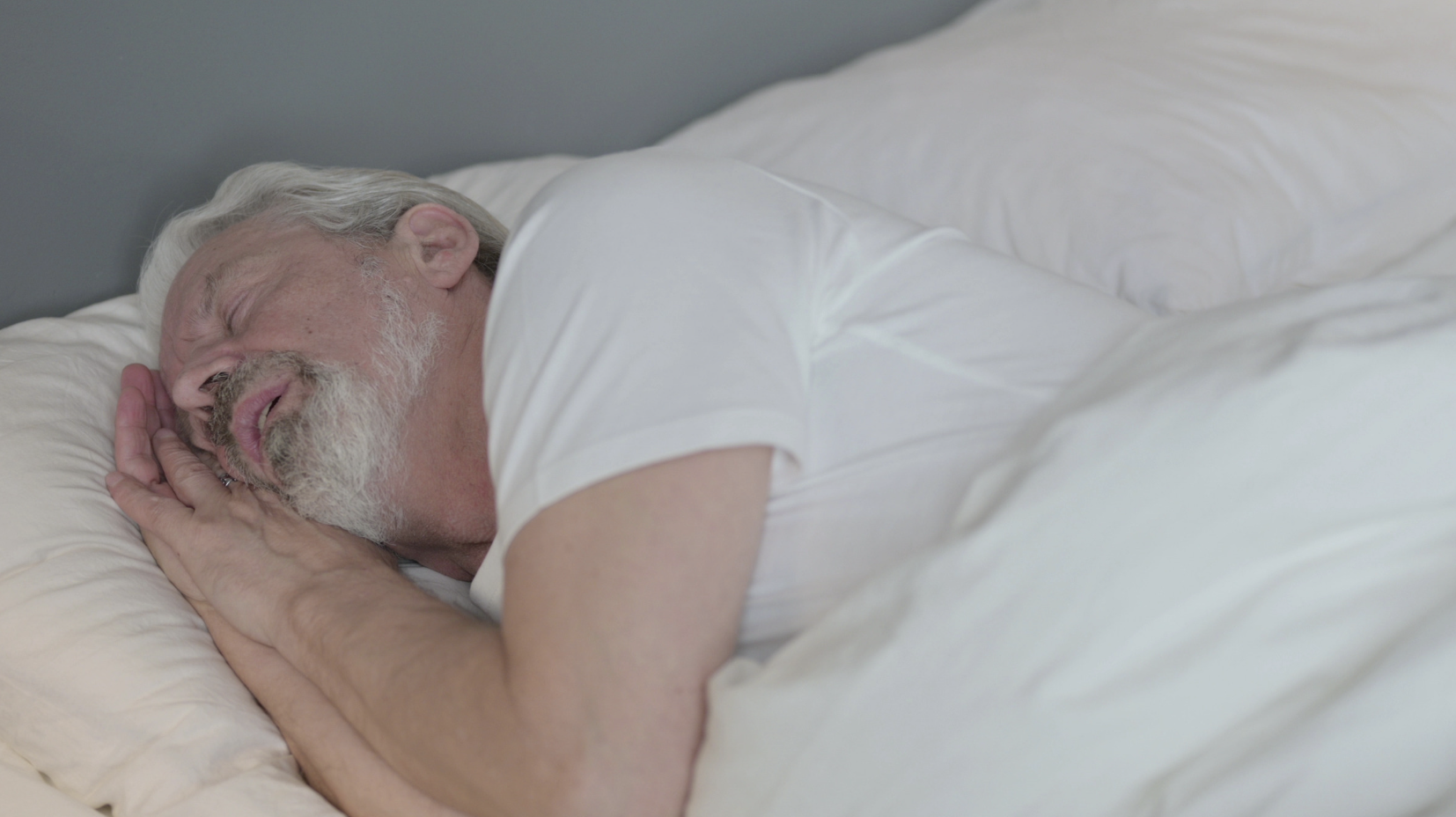
Setting the Record Straight on One of the Most Common Misconceptions in Dental Sleep Medicine
It is not unusual for patients to arrive at SleepWise Clinic having already been given opinions about their treatment options - sometimes by GPs, sometimes by sleep physicians, and sometimes by other clinicians whose expertise lies elsewhere. We welcome these conversations, and we understand that sleep medicine intersects with so many other fields of practice that it is genuinely difficult to stay across everything.
One misconception we encounter more than we should, however, is this: that a mandibular advancement splint (MAS) only works if the patient does not sleep on their back.
This belief is not entirely without foundation. However, as a clinical conclusion - and particularly as a reason to steer a patient away from oral appliance therapy - it does not hold up to scrutiny. The evidence tells a more nuanced and, for patients, considerably more encouraging story.
Where the Belief Comes From
The grain of truth at the centre of this misconception is real, and worth acknowledging. Sleeping on the back - the supine position - is one of the most significant positional triggers for both snoring and obstructive sleep apnoea. When a person lies supine, gravity acts directly on the soft tissues of the throat: the tongue base falls posteriorly, the soft palate descends, and the pharyngeal walls narrow. The airway becomes more collapsible, and for many patients, the apnoea-hypopnoea index (AHI) in the supine position is substantially higher than in a lateral position. Some patients have what is termed purely positional obstructive sleep apnoea (OSA), where meaningful apnoea events occur almost exclusively when supine.
So it is true that the supine position is harder on the airway. It is also true that a non-supine sleep position reduces the gravitational load on the pharynx and therefore reduces the degree of airway support required. These are facts, and they inform good clinical practice.
The error is in concluding from these facts that a mandibular advancement splint cannot adequately support the airway in the supine position - or that positional sleep apnoea is best managed by position alone, with no role for an oral appliance.
What a MAS Actually Does - and Why Position Doesn't Disable It
A mandibular advancement splint or sleep apnoea mouthguard works by mechanically repositioning the lower jaw forward during sleep. This forward advancement physically tightens the soft tissues of the upper airway, pulls the tongue base away from the posterior pharyngeal wall, and increases the cross-sectional area of the airway at the level of the velopharynx and oropharynx - the sites most commonly implicated in both snoring and obstructive sleep apnoea.
Critically, this mechanism operates independently of body position. The forward jaw position created by the MAS does not disappear when the patient rolls onto their back. The mechanical tension on the airway soft tissues is maintained. The tongue base remains forward. The airway remains more patent than it would be without the device, regardless of whether the patient is supine, lateral, or prone.
Clinical studies on mandibular advancement splints consistently include patients with positional OSA among their cohorts, and demonstrate clinically meaningful reductions in AHI and snoring frequency across all sleeping positions, including supine. A well-titrated MAS does not stop working when the patient moves onto their back. It continues to provide mechanical airway support throughout the night, through every position change, for the full sleep period.
The More Accurate Picture
Rather than ‘MAS only works if you don't sleep on your back’, the more clinically accurate statement is: a mandibular advancement splint works in all positions, and works most efficiently when combined with non-supine sleep - because in a non-supine position, there is simply less airway collapse to counteract.
This distinction matters enormously in practice. Most people cannot sustain a single sleep position throughout the night. Even patients who begin the night on their side will rotate, and many spend a significant proportion of their total sleep time in a supine or near-supine position. A treatment that only functioned in one position would, in real-world conditions, fail for most of the population on most nights.
The practical consequence of the more accurate picture is this: for back sleepers, the MAS is still an effective and appropriate treatment. For patients where positional dependency is significant, a well-calibrated MAS can be optimised with additional titration to increase the degree of jaw advancement, providing greater mechanical airway support that compensates for the additional gravitational load in the supine position. And where clinically relevant, simple positional strategies - such as a body pillow or a positional device - can complement the MAS rather than replace it, working with the appliance to produce the best possible outcome.
For Referring Clinicians
The position of the Australian Dental Association and the Australasian Sleep Association is that custom oral appliances are a clinically recommended treatment for snoring and mild to moderate obstructive sleep apnoea - a recommendation that does not carry a positional caveat.
If you have a patient with positional OSA or significant supine-dependent snoring and sleep apnoea, we would warmly encourage a referral to a sleep medicine trained dentist for a proper assessment rather than a positional exclusion at the referral stage. The assessment will take sleep position into account as one of many clinical factors, the appliance will be designed and titrated accordingly, and the patient will have the opportunity to try a treatment that the evidence supports, rather than being steered away from it on the basis of a misconception.
We are always happy to discuss complex cases with referring clinicians and welcome collaborative care relationships with the broader medical team.
The Bottom Line for Patients
If you have been told that a mandibular advancement splint will not work for you because you sleep on your back, please know that this is not what the evidence shows. Guided treatment with a well-fitted, properly titrated MAS from SleepWise Clinic is designed to manage your airway - not your sleeping position. It works through every position change, all night, every night. Positional therapy can be impactful for your sleep and is also well worth your time and effort in exploring.
Side sleeping remains the friendlier environment for the airway, and where it is achievable, it is worth encouraging and is not a prerequisite for effective oral appliance therapy. The two approaches work best together, and one does not preclude the other.
Call SleepWise Clinic on 1300 101 505 to speak with one of our sleep medicine trained dentists, or take our free online sleep apnoea test. Whatever position you sleep in, there is a good chance we can help.
